- Tel: +44 (0)20 7734 1286
- Post: talent@sohoeditors.com
- Fulltime: vacancy@sohoeditors.com
- Training: training@sohoeditors.com

The Future of Post-Production Is About People
The Future of Post-Production Is About People
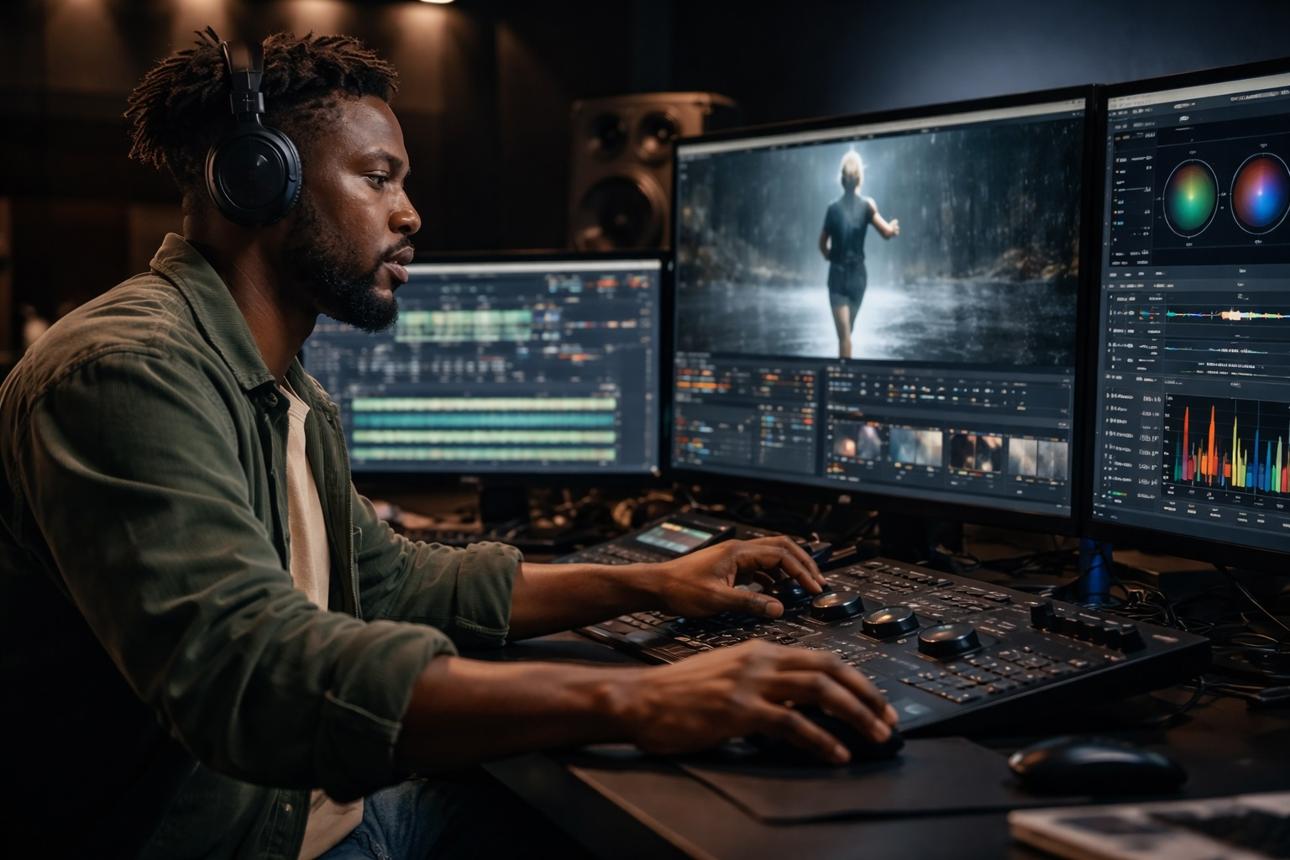
The Future of Post-Production Is About People: Why the Industry Needs to Rethink How It Manages Freelance Talent
As the post-production industry faces mounting commercial pressures and a fundamental shift in how work is delivered, one of its greatest untapped resources is the freelance workforce. Better engagement, talent management and investment in people could be essential to building a more resilient industry.
The recent Televisual Exchange report, The Value and Future of Post, supported by Sohonet, makes uncomfortable reading for anyone invested in the future of the UK post-production industry. The closure of established and respected businesses, mounting financial pressures, changing commissioning patterns and the economics of traditional post-house models all point towards an industry undergoing significant structural change.
Yet, amid the discussions about facilities, technology, infrastructure, overheads and margins, one theme stands out: the importance of people.
The report explores a future built around smaller permanent teams, more flexible infrastructure, remote working and greater reliance on freelance talent. Several contributors suggest that the traditional model of maintaining large permanent teams and expensive facilities may no longer be commercially sustainable. Instead, businesses will increasingly need to scale their operations according to individual production requirements, bringing together the right people and resources when they are needed.
This is an important evolution, but it also raises a fundamental question: if freelance talent is becoming increasingly central to the industry's operating model, why is so little attention being paid to how that talent is identified, engaged, supported and managed?
Freelancers are no longer simply an additional resource
Freelancers have always been an integral part of post-production. Editors, assistant editors, producers, colourists, sound specialists, VFX artists and technical operators have provided the flexibility that allows businesses to respond to fluctuating workloads and changing production demands.
However, their role is evolving.
As facilities move towards more flexible and hybrid operating models, freelancers are becoming much more than a means of filling temporary vacancies. They are an essential part of the industry's core capability.
The ability to assemble an experienced team quickly, with the right combination of creative, technical and operational skills, could become one of the most important competitive advantages a post-production business can possess.
As the report suggests, there is outstanding creative talent working independently across the industry. The opportunity is to bring those individuals together around individual productions without necessarily requiring them to be permanently attached to a particular facility.
But this flexibility cannot simply mean having access to a database of available people and making a few phone calls when a project comes in.
It requires a more sophisticated approach to talent management.
The missing piece: proactive freelance talent management
One of the biggest challenges facing the industry is that freelancers are often treated as a resource to be accessed rather than a community of skilled professionals to be actively managed and developed.
There is a significant difference.
Knowing who is available is only the starting point. Understanding their experience, strengths, ambitions, working preferences, technical capabilities, reliability and suitability for particular productions is what creates real value.
The industry needs better systems and organisations capable of maintaining meaningful relationships with freelance professionals throughout their careers, not simply when a booking opportunity arises.
That means:
• Understanding the talent pool: Maintaining accurate, current knowledge of freelancers' experience, specialist skills, credits, technical abilities and career development.
• Building meaningful relationships: Regular communication and engagement rather than contacting people only when work becomes available.
• Matching talent intelligently: Looking beyond availability and day rates to identify the right creative and technical fit for each production and team.
• Supporting career development: Helping freelancers identify new opportunities, develop relevant skills and adapt to changing technologies and workflows.
• Improving communication: Providing greater visibility around forthcoming opportunities, booking expectations, cancellations and changing production schedules.
• Creating continuity: Building relationships that allow production companies and post facilities to access trusted people who already understand their requirements and working practices.
This is not simply an administrative exercise. It is about creating a better-connected, more knowledgeable and more responsive freelance workforce.
Better talent management makes commercial sense
The commercial arguments are compelling.
The report highlights the financial risks associated with maintaining permanent overheads against uncertain production schedules. It also identifies the growing importance of flexible operating models, in which a smaller core team can be supplemented by experienced freelance professionals when demand increases.
However, flexibility only works effectively if the talent infrastructure exists to support it.
Finding the right person at short notice, particularly for specialist or senior roles, can be difficult. A poorly matched appointment can create delays, additional costs and unnecessary pressure on production teams.
Conversely, having access to a properly managed network of known, vetted and appropriately experienced professionals can reduce recruitment time, improve team cohesion and help ensure that productions are staffed with the right expertise from the outset.
There is also an important financial consideration for freelancers themselves. Uncertainty around production schedules, postponed bookings and cancellations makes forward planning increasingly difficult. Better communication, more professional booking practices and stronger relationships between employers, intermediaries and freelancers would benefit the entire supply chain.
The objective should not simply be to find cheaper people. It should be to find the right people, at the right time, with the right skills, and to make the process of engaging them more efficient and reliable.
Technology is changing the work, but people remain the differentiator
The report rightly identifies cloud workflows, automation and AI as important elements of the industry's future.
These technologies will undoubtedly change how post-production teams operate. Some traditional tasks will become automated, new technical skills will be required, and the boundaries between production, post-production and technology will continue to evolve.
But technology does not remove the need for experienced people. In many respects, it increases the importance of having people who understand how to apply it effectively.
As workflows become more complex and distributed, the ability to identify professionals with the right combination of creative judgement, technical knowledge and practical experience becomes even more important.
There is also a risk that the move towards greater flexibility and automation could weaken the informal relationships through which knowledge has traditionally been transferred within post-production.
The report raises legitimate concerns about how the next generation will learn their craft, particularly as AI automates some of the tasks through which junior professionals have historically gained experience.
This makes training and professional development an increasingly important part of the conversation.
Freelancers need opportunities to keep their skills current, understand emerging technologies and remain competitive. Equally, the industry needs to ensure that experienced professionals can pass on their knowledge and that new entrants have clear routes into employment.
Talent management and training should therefore be considered two sides of the same coin.
The role of specialist talent organisations
This is where specialist talent and recruitment organisations have an increasingly important role to play.
An organisation that understands the post-production industry, knows its people and maintains active relationships with freelancers can provide something that a conventional recruitment agency or automated booking platform cannot easily replicate.
The value is not simply in maintaining a list of names, CVs and availability. It is in understanding the individuals behind them.
Which editor is particularly good at a certain genre? Who has the experience to manage a demanding production? Which assistant editor is ready to take the next step? Who has developed expertise in a new workflow? And, perhaps just as importantly, who will work well with a particular production team?
These are questions that require industry knowledge, personal relationships and ongoing engagement.
For organisations such as Soho Editors, whose business is built around understanding, connecting and developing post-production talent, this represents an opportunity to play a much broader role in the industry's future.
Rather than simply responding to individual vacancies, specialist talent organisations can help businesses plan their workforce requirements, identify skills gaps, access trusted freelancers and support the continuing development of their teams.
They can also act as an important link between freelancers and the companies that commission their services, helping to improve communication, manage expectations and create more professional working relationships.
In an increasingly fragmented and flexible market, that connecting role could become invaluable.
Freelancers need a stronger voice in the industry's future
There is another important issue that deserves greater attention: the need to involve freelancers more directly in conversations about the future of post-production.
Much of the current industry debate understandably focuses on business owners, production executives, commissioners and facility operators. But freelancers are directly affected by almost every change being discussed.
They experience the uncertainty of production schedules, the pressure on rates, the impact of cancellations, the introduction of new technologies and the changing expectations placed on post-production professionals.
They also have first-hand knowledge of what is working, what is not, where skills shortages are emerging and what support would make a genuine difference.
Their experience should inform decisions about recruitment, training, technology adoption and the future structure of the workforce.
Industry organisations, training providers, post facilities and production companies should be doing more to engage with freelancers collectively, rather than relying on occasional surveys or informal conversations.
A more connected freelance community would also help the industry identify emerging talent, understand changing skills requirements and respond more effectively to market developments.
Building a more sustainable industry
The Televisual Exchange report concludes that the future of post-production is unlikely to be a simple return to the traditional facility model. Instead, it will involve a combination of creative expertise, flexible infrastructure, new technologies and more collaborative ways of working.
That feels right.
But the success of that model will depend on how effectively the industry manages its most important resource: its people.
A smaller permanent workforce supported by a larger, flexible freelance community is only a sustainable proposition if that community is properly understood, supported and developed.
We need to move beyond the idea that freelancers are simply available labour that can be brought in when required. They are highly skilled professionals, many with decades of experience, whose knowledge and creative contribution are fundamental to the quality of the programmes being delivered.
The industry needs to invest in better talent intelligence, stronger professional relationships, continuous training and more effective ways of connecting people with opportunities.
It also needs to recognise that talent management is not an optional extra or an administrative function. It is a vital part of building an efficient, resilient and commercially sustainable post-production sector.
The facilities may change. The technology will certainly change. The way productions are organised will continue to evolve.
But the need for great people will not disappear.
Perhaps the next important step in the industry's evolution is not simply rethinking the post-production business model, but rethinking how we find, engage, manage and develop the people who make it work.